
 EN
 BG
HP ProBook 430 G7 The compact entry ProBook from the generation before G8
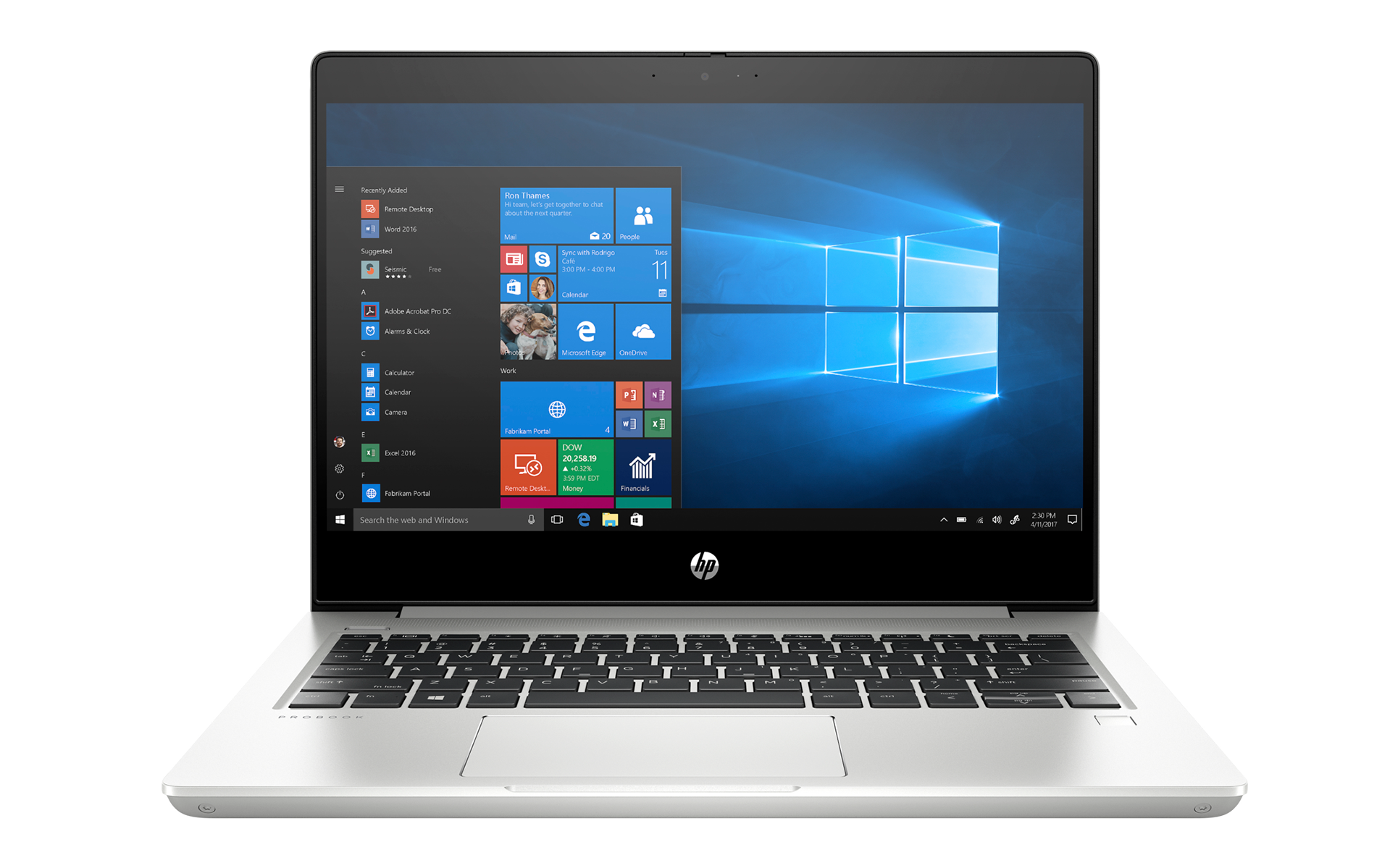
The ProBook 430 G7 is HP's 13.3-inch entry business laptop — the bottom rung of the portfolio, with an aluminium chassis, two SO-DIMM slots for memory upgrades and MIL-STD-810H durability. As a refurbished business laptop from ITR Bulgaria, it is an affordable way for a small business or a student to get a brand-name machine built for work rather than for home.
Benefits
Why the HP ProBook 430 G7 is a sensible pick in the entry business class as a refurbished laptop
Two SO-DIMM slots up to 32 GB — rare for the 13.3″ class
The memory sits on replaceable modules in two SO-DIMM slots, not soldered to the board. Start with 8 GB and add more later, or fill it to 32 GB DDR4-2666 from the outset — the machine grows with your needs.
Aluminium chassis with MIL-STD-810H
The aluminium chassis passes the same family of military-standard tests for vibration, shock and temperature used on EliteBook machines — uncommon at the entry tier.
Compact 13.3-inch form factor
Smaller and easier to carry than its 14- and 15-inch siblings. It fits a student backpack or a bag between meetings without a second thought.
FHD IPS display at 250 nits (option)
Configurations with the FHD IPS anti-glare panel at 250 nits give a clean, readable image through a full work day. More basic units ship with HD TN at 220 nits — worth checking the specific one.
45 Wh battery with HP Fast Charge
HP Fast Charge returns up to 50% in about 30 minutes with the laptop off or in standby and an adapter of at least 65 W; the time can vary by about 10%. Enough to plug in over a break between two tasks and keep going, without dragging the charger everywhere.
Replaceable M.2 NVMe SSD
The SSD swaps out — together with the two RAM slots, these are the parts that extend the machine's life without replacing the whole laptop. That is what makes it a good fit for long use.
Full-size RJ45 Ethernet + HDMI
A full-size RJ45 port and HDMI 1.4b on board. For an office still running wired networking or a projector in the meeting room, that saves an adapter every time.
Core HP Wolf Security components
HP Sure Start (hardware BIOS protection), Sure Sense, Sure Click and BIOSphere are present even at the entry tier — the core protection, without the full enterprise package of the EliteBook.
Spill-resistant keyboard with optional backlight
The keyboard resists spills and comes with an optional backlight for working in a darker room. A small thing on paper that saves a laptop when coffee goes over the desk.
Sensible value as a refurbished laptop
As a used laptop that has been through a technical audit and refurbishment, the HP ProBook 430 G7 puts brand-name business class within reach at a price a new machine in the same class rarely matches.
HP ProBook 430 G7: the compact entry ProBook from the generation before G8
HP's business laptops line up in three clear tiers, and that ladder explains a lot about any single model. ProBook 400 is the entry level — the core business functions, without the full corporate package of the higher series. ProBook 600 is the mainstream for heavier work. EliteBook 800 is the premium flagship that IT departments buy for executives and mobile professionals. The ProBook 430 G7 lives on the lowest of those rungs: the 13.3-inch entry model from the generation right before G8, built around the Intel Comet Lake-U platform, two SO-DIMM slots and an aluminium chassis.
The ProBook line did not appear by accident. When HP created it, the idea was simple — small and mid-sized companies wanted the same business security and durability as the EliteBook, but without the flagship price. So the ProBook became HP's affordable work line: a metal chassis, a spill-resistant keyboard and military-standard testing in the lower class, without the premium extras. The ProBook 430 G7 inherits exactly that logic. The chassis passes MIL-STD-810H tests — a set of checks for vibration, shock, dust and temperature that EliteBook machines are measured against too. For a small business buying a laptop to last several years in daily office use, that is precisely the difference between a device designed for home and one designed for work.
The line's birth date is April 28, 2009 — a moment chosen as if in defiance of circumstance: the world economy was just catching its breath after the financial crisis. Which is exactly why the ProBook hit the mark. Small firms were cutting costs everywhere but could not afford equipment that betrayed them; HP offered the middle path — a real business laptop with a spill-resistant keyboard and serious construction, without the EliteBook's premium markup. Fifteen years later the recipe has not moved a millimeter, because it has not needed to.
The most practical advantage of the HP ProBook 430 G7, though, is hidden inside. The memory sits in two SO-DIMM slots, not soldered to the board — uncommon in the 13.3-inch class, where most compact laptops trade the upgrade away for a thinner chassis. In practice you can start with 8 GB and add more when the budget allows, or fill it to 32 GB DDR4-2666 from the start. The M.2 NVMe SSD swaps out as well — two parts that extend the machine's life without replacing the whole laptop. For a business student or a company equipping a new office in stages, that means the laptop grows with the workload instead of ageing out for want of memory. The platform is Intel Comet Lake-U with integrated UHD 620 graphics — fine for documents, email, spreadsheets and video calls, but not for video editing or 3D work. A 45 Wh battery with HP Fast Charge returns about 50% in roughly half an hour.
Comparing it with the rest of its era clarifies who the HP ProBook 430 G7 is for. Its direct successor, the HP ProBook 430 G8, is lighter (starting at 1.28 kg with the 400-nit panel against 1.49 kg without touch here) and brings Intel Tiger Lake with 10 Gbps USB-C, DisplayPort 1.4 and charging, but no Thunderbolt — a step forward if you need a single-cable dock or more portability; the 430 G7 in return keeps both full SO-DIMM slots. Among rivals from other brands the difference is often size: the Dell Latitude 3410 is a 14-inch entry laptop, a different size class rather than a direct 13.3-inch competitor. The Lenovo ThinkPad E14 Gen 1 is also 14-inch and comes with the classic ThinkPad keyboard and the TrackPoint in the middle of the keys — something the 430 G7 does not have. If you value the compact 13.3-inch form factor and the ability to add memory, the ProBook stays the more logical choice over the two larger competitors.
The honest trade-off is clear: the USB-C port on the HP ProBook 430 G7 supports an external display and charging, but it is not Thunderbolt — the G8 has no Thunderbolt either. Graphics are integrated UHD 620, with no discrete option, and the weight of around 1.49 kg is not among the lightest in the class. For the people it was built for — a small business on a controlled budget, students, standard office tasks — those are rarely obstacles. As a refurbished laptop from ITR Bulgaria, the HP ProBook 430 G7 goes through a technical audit and refurbishment before it ships with a real warranty; that puts a brand-name used business laptop well below the price of a new machine in the same class, while the two SO-DIMM slots and the replaceable SSD leave room to upgrade later.
Who it is for
Scenarios where the HP ProBook 430 G7 makes the strongest sense
Small business on a controlled budget
A company of a few people that wants a brand-name business laptop with a warranty but cannot stretch to an EliteBook. The 430 G7 gives the metal chassis and core HP security at an affordable price, and the two RAM slots leave room to upgrade later.
Business-degree student
The compact 13.3-inch form factor slips into a backpack and weighs little. Light enough to carry all day between lectures, the library and project work at home — and if the software for a course needs more RAM, you add memory instead of changing the laptop.
Standard office tasks
Documents, email, spreadsheets and video calls on Teams or Zoom. The Comet Lake-U platform with UHD 620 graphics handles this daily work smoothly — and the full RJ45 port helps in offices that still rely on wired networking.
Initial fit-out of a new office
When you are starting an office and need to equip several workstations at once without emptying the budget. Begin with a base 8 GB configuration and upgrade the machines that pick up heavier work — without throwing anything away.
Model highlights
13.3″ entry in the ProBook 400 line
The most compact in the 430 / 440 / 450 / 470 size hierarchy. It sits at the entry level of HP's business portfolio, below the mainstream ProBook 600 and the premium EliteBook 800.
Intel Comet Lake-U platform
Processor options Core i3-10110U, i5-10210U and i7-10510U from Intel's 10th generation, with integrated UHD 620 graphics. The generation right before the Tiger Lake that arrives with G8.
2× SO-DIMM up to 32 GB DDR4-2666
No soldered memory — the two slots allow an upgrade to 32 GB at purchase or afterwards. Uncommon in the 13.3-inch class, where compact machines usually fix the memory to the board.
45 Wh battery + HP Fast Charge
A three-cell 45 Wh battery with HP Fast Charge — up to 50% in about 30 minutes with the laptop off or in standby and an adapter of at least 65 W; the time can vary by about 10%. Enough for a standard work day of office tasks with intermittent use on battery.
Aluminium chassis, MIL-STD-810H
An aluminium chassis around 17.95 mm thick, tested to MIL-STD-810H for durability — a standard inherited from the higher series. The lid does not flex under your fingers the way the plastic on cheaper machines does.
USB-C with DP and PD — no Thunderbolt
A USB-C port with support for an external display (DisplayPort) and charging (Power Delivery), but no Thunderbolt. That is standard for the entry tier of the 10th generation; the HP ProBook 430 G8 has no Thunderbolt either.
Full RJ45 + HDMI 1.4b + SD reader
The ports cover wired networking, an external monitor and a full-size SD card reader. Two USB-A 5Gbps ports (one with charging), an audio jack and a Kensington lock slot round it out.
Core Wolf Security + TPM 2.0
HP Sure Start Gen5, Sure Sense, Sure Click and BIOSphere Gen5, alongside a firmware TPM 2.0 and an optional fingerprint reader. The core HP protection, without the full enterprise Wolf Security package of the EliteBook.
Refurbished by ITR Bulgaria: what value do you get?
Buying a refurbished business-class laptop makes the strongest sense when the device has gone through a standardised internal refurbishment process and arrives with a real warranty. That is how used laptops become refurbished laptops — a practical, predictable and professional alternative to new entry-level machines, or a far more sensible purchase than new premium equivalents.
- ✓ Technical audit and cosmetic assessment of the device according to an internal standard
- ✓ Refurbishment, cleaning, quality improvement and configuration to standard for repeat business use
- ✓ Use of original software and a prepared configuration appropriate to the model
- ✓ Packaging, real warranty and ongoing support for the model from ITR Bulgaria
Ready to see what is in stock?
The HP ProBook 430 G7 is a refurbished business laptop from the entry ProBook 400 line — compact, with room to upgrade, and delivered with a warranty from ITR Bulgaria. Browse the current stock or get in touch for assistance.
Additional information
Where this model fits in the series ▼
The HP ProBook 430 G7 belongs to the ProBook 400 series — HP's entry business line. Below it in the portfolio sits only the consumer range; above it are the ProBook 600 (mainstream business for heavier work) and the EliteBook 800 (premium flagship for corporate IT departments and executives). ProBook 400 delivers the metal chassis, military-standard testing and core HP security at an affordable price, without the premium extras of the higher series.
Within the ProBook 400 family, the G7 generation has three size variants: the HP ProBook 430 G7 (13.3″, the most compact), the HP ProBook 440 G7 (14″, the most common size) and the HP ProBook 450 G7 (15.6″, with a full NumPad and an optional dGPU). The separate 17.3-inch alternative is the HP 470 G7, with a large working area. The HP ProBook 430 G7 is the pick for people who prioritise compactness and portability over screen real estate.
Within the HP ProBook 430 model itself, this is the generation before G8. Its predecessor is the HP ProBook 430 G6 (an earlier Intel platform), and the successor HP ProBook 430 G8 moves to Intel Tiger Lake with 10 Gbps USB-C, DisplayPort 1.4 and charging, without Thunderbolt. The G7 stays one of the more common generations on the refurbished market thanks to its long business lifecycle and accessible price.
The HP ProBook 430 G7 is not ideal if… ▼
- You need a discrete graphics card for video editing, 3D or CAD. The HP ProBook 430 G7 relies on integrated Intel UHD 620 only; if you want a dGPU within ProBook 400, look at the 15.6-inch HP ProBook 450 G7 with an optional NVIDIA MX graphics chip.
- You are after Thunderbolt for a single-cable dock or fast external storage — the HP ProBook 430 G7 has USB-C with DisplayPort and charging, but no Thunderbolt. Single-cable USB-C docking is possible without Thunderbolt; the HP ProBook 430 G8 has no Thunderbolt either.
- You want the EliteBook premium extras — vPro for centralised management or the full Wolf Security package. Those features live on the EliteBook 800 series, not the entry ProBook 400.
- Your priority is a 14- or 15-inch screen — the HP ProBook 440 G7 (14″) or HP ProBook 450 G7 (15.6″) are the direct larger variants from the same generation.
- You insist on a ThinkPad keyboard and TrackPoint — the HP ProBook 430 G7 has a standard HP keyboard with no pointing stick. For that style, look at a Lenovo ThinkPad in a similar class.
- You need a guaranteed specific configuration (an exact CPU, RAM, SSD, or the FHD IPS panel rather than HD TN) — configurations vary, so it is worth checking the specific unit.
Choosing the right size/form factor ▼
13.3-inch class (HP ProBook 430 G7): the most compact in the line, with a starting weight of 1.49 kg without a touchscreen and 1.68 kg with one. A good fit for people who carry the laptop every day and prioritise a smaller footprint in the bag. Trade-off: less screen working area.
14-inch class (HP ProBook 440 G7): the most common size. A little more screen at similar portability — the standard pick for an office worker.
15.6-inch class (HP ProBook 450 G7): more screen and a full NumPad on the keyboard, plus an optional NVIDIA MX dGPU. Heavier — suited to work mostly at a desk.
17.3-inch class (HP 470 G7): the largest working area for multi-window work. For mostly stationary work at a fixed workstation.
Construction: the HP ProBook 430 G7 has an aluminium chassis around 17.95 mm thick, tested to MIL-STD-810H for durability — unusual at the entry tier, where plastic is common.
Alternative models ▼
Within HP:
HP ProBook 430 G8 — the direct successor (Intel 11th generation, Tiger Lake). Lighter (around 1.28 kg), with Iris Xe graphics and 10 Gbps USB-C, without Thunderbolt. A more current platform, but usually at a higher refurbished price.
HP ProBook 430 G6 — the previous generation. A more affordable option on an older Intel platform. A reasonable pick on a very tight budget.
HP ProBook 440 G7 — the 14-inch variant from the same generation and platform. More screen area at a similar price; the choice if compactness is not a priority.
HP EliteBook 830 G7 — if the budget allows a step up: the premium 13.3-inch class with vPro, a Sure View option and the full Wolf Security package.
Cross-brand alternatives (entry business class, Intel 10th generation):
Dell Latitude 3410 — an entry Dell Latitude, but in a 14-inch form factor, so a different size class rather than a direct 13.3-inch rival to the HP ProBook 430 G7. The choice if you prefer a larger screen on an entry budget.
Lenovo ThinkPad E14 Gen 1 (Intel) — also a 14-inch entry business laptop, with the classic Lenovo ThinkPad keyboard and the TrackPoint in the middle of the keys. The HP ProBook 430 G7 is more compact and has no TrackPoint.
Note: do not compare the HP ProBook 430 G7 with the HP EliteBook 830 or Dell Latitude 7320 as equivalents — they are from the premium business class, with a different price and target group.
Refurbished by ITR Bulgaria: what value do you get? ▼
The HP ProBook 430 G7 is a model where refurbishment by ITR Bulgaria builds on a service-friendly design. The two SO-DIMM slots and the replaceable M.2 NVMe SSD mean memory and storage can be selected and upgraded to suit the configuration — with no compromise from fixed components. That keeps the technical audit and refurbishment simple and clear.
On top of this comes the broad business deployment of the ProBook 400 series, which keeps spare parts and chargers easy to source. As a used laptop from the entry business class, the HP ProBook 430 G7 is a practical choice with long-term support. Once it has been through refurbishment, the model is prepared for repeat business use and arrives with a real warranty and support from ITR Bulgaria.
Frequently asked questions ▼
Is the HP ProBook 430 G7 a good choice as a used business laptop?
For a small business, a student or standard office tasks — yes. You get a brand-name business laptop with an aluminium chassis, core HP security and the ability to upgrade memory, at a price a new machine in the same class rarely matches. As a refurbished laptop that has been through a technical audit, it ships with a real warranty from ITR Bulgaria.
What is the difference between the HP ProBook 430 G7 and G8?
The G8 moves to Intel's 11th generation (Tiger Lake) with Iris Xe graphics instead of UHD 620, adds a faster USB-C (10 Gbps with DisplayPort 1.4), still without Thunderbolt, and is lighter (around 1.28 kg against ~1.49 kg on the G7). The G7 in return is more affordable on the refurbished market and keeps both full SO-DIMM slots. For standard office work the day-to-day difference is small; for more portability or a single-cable dock, the G8 is a step forward.
What is the difference between the HP ProBook 430 G7 and HP ProBook 440 G7?
Mostly size: the HP ProBook 430 G7 is 13.3-inch and more compact, the HP ProBook 440 G7 is 14-inch with a little more screen area. The platform (Comet Lake-U), the materials and the business features are nearly identical. The 430 is for those who prioritise portability; the HP ProBook 440 G7 for those who want more screen.
Is the HP ProBook 430 G7 suitable for equipping office staff?
Yes, especially for small and mid-sized companies on a controlled budget. The military-standard durability and core HP security make it reliable for daily office use, while the RAM upgrade path lets you start with a base configuration and upgrade the busier workstations. As a refurbished business laptop from ITR Bulgaria, it comes with a warranty.
What configurations are common on the HP ProBook 430 G7?
The model is found with Intel Core i3, i5 or i7 from the 10th generation (Comet Lake-U), RAM up to 32 GB DDR4-2666 across two SO-DIMM slots, and an M.2 NVMe SSD. The display is 13.3″ in two main options — HD TN at 220 nits or FHD IPS anti-glare at 250 nits. On certain units a fingerprint reader and Wi-Fi 6 may be present. It is worth checking the specific configuration.